


The Gulag Archipelago - Vol 2
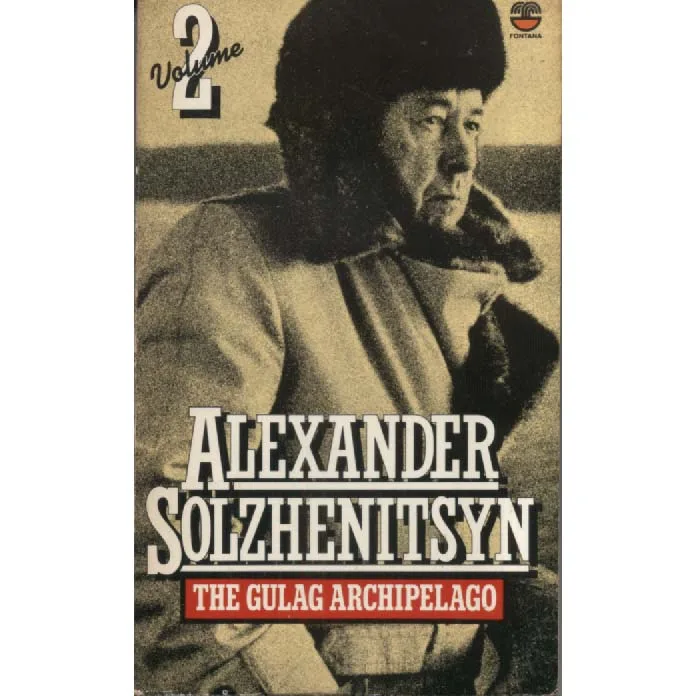
Publisher: Fontana
Format: Paperback
ISBN: 0006337872
The Gulag Archipelago – Volume 2 (1976) – Aleksandr Solzhenitsyn
Fontana | ISBN: 0006337872
Condition: Good | Sold by Crappy Old Books
The Soviet Union. A workers’ paradise, according to the official brochures, where the proletariat had seized the means of production, class exploitation had supposedly been abolished, and everyone was marching triumphantly towards a glorious socialist future. Unfortunately, anyone expressing insufficient enthusiasm for this magnificent arrangement could find themselves dispatched to a remote labour camp, where the opportunities for revolutionary self-improvement included chopping timber, digging canals and attempting to survive a Siberian winter on rations that would barely satisfy a moderately hungry pigeon.
Welcome to The Gulag Archipelago – Volume 2, Aleksandr Solzhenitsyn’s monumental investigation into one of the twentieth century’s most appalling systems of political repression.
Having survived imprisonment in the Soviet labour-camp system himself, Solzhenitsyn devoted years to documenting the extraordinary machinery of terror that operated behind the Soviet Union’s carefully cultivated image of socialist progress. Drawing upon personal experience, survivor testimony and painstaking research, he created a work that exposed the bureaucratic brutality of a state supposedly dedicated to the liberation of humanity.
And what a bureaucracy it was.
Arrests, interrogations, fabricated accusations, arbitrary sentences and forced labour became components of a vast apparatus in which individuals could disappear into the penal system for offences ranging from political opposition to telling an insufficiently flattering joke about Joseph Stalin.
Volume Two continues this devastating examination, concentrating particularly upon the workings of the camps themselves and the experiences of those condemned to inhabit them. Solzhenitsyn describes the routines, hierarchies, hardships and survival strategies of prisoners trapped within a system where human beings were treated as expendable resources.
The grim irony is almost overwhelming. A government proclaiming the dignity of labour maintained an enormous network of forced labour camps. A political system promising equality developed extraordinary privileges for its ruling elite. And a state claiming to represent ordinary workers created institutions in which countless ordinary workers were imprisoned, exploited and destroyed.
Solzhenitsyn’s achievement lies not merely in documenting suffering but in examining the moral and political mechanisms that allowed such suffering to become an accepted instrument of government. His writing combines testimony, historical investigation, philosophical reflection and savage irony, exposing both the cruelty of the system and the extraordinary human capacity for endurance.
Originally published in the 1970s, The Gulag Archipelago became an international literary and political sensation, profoundly influencing Western understanding of Soviet repression. It remains an essential work for anyone studying totalitarianism, political imprisonment and the consequences of placing unlimited power in the hands of an unaccountable state.
This 1976 Fontana paperback, offered in Good condition by Crappy Old Books, is an important addition to collections of twentieth-century history, Russian literature, political philosophy and accounts of human survival under extreme oppression.
A harrowing, intellectually formidable and historically significant work that strips away the comforting language of ideology to reveal the human consequences beneath.
Because it is relatively easy to promise a perfect society.
The difficulties begin when people notice that perfection requires secret police, censorship, mass imprisonment and a seemingly inexhaustible supply of barbed wire.
And when the state insists that everybody is happy, the sensible question is why so many people are afraid to disagree.
Keep browsing: See more History books Other books by Alexsander Solzhenitsyn
